
Wiring Diagram Ballast Resistor Ignition Coil
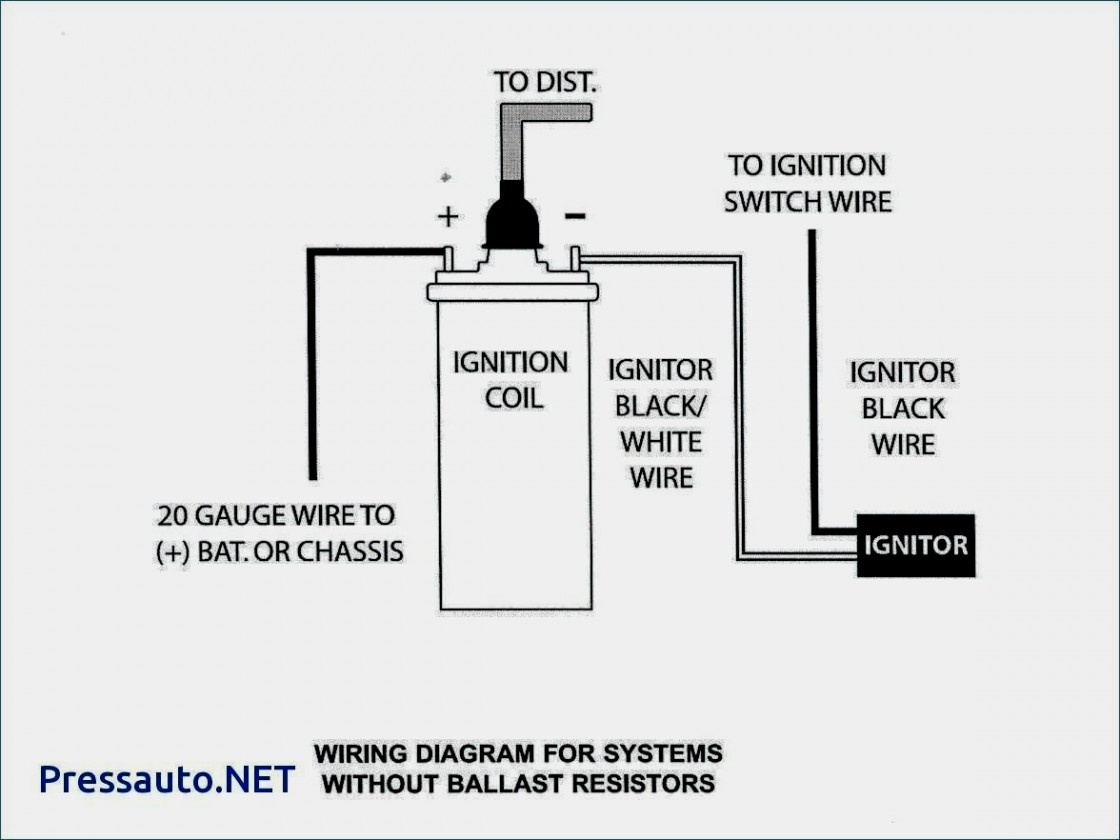
Let's dive into a crucial part of many older ignition systems: the wiring diagram for a ballast resistor ignition coil. This isn't just some old-school tech; understanding it is vital for diagnosing ignition problems in classic cars, performing engine swaps, or even learning the fundamentals of how spark ignition systems work. It’s a system that, while seemingly simple, can be a real headache if you don’t understand its nuances. We're going to break down the diagram, its components, and how it all works together.
Purpose of Understanding the Wiring Diagram
Why bother with this diagram? Several reasons come to mind:
- Troubleshooting Ignition Problems: A faulty ballast resistor or incorrect wiring can cause weak spark, no spark, or even burnt-out ignition components. The diagram gives you a roadmap to trace the circuit and pinpoint the problem.
- Restoring Classic Cars: Original wiring is often brittle and cracked. The diagram allows you to correctly rewire the ignition system to factory specifications.
- Engine Swaps and Modifications: If you're installing an older engine that uses a ballast resistor system into a newer vehicle, or modifying an existing system, you need to know how to wire it correctly.
- Learning Ignition System Fundamentals: Understanding the ballast resistor system is a great way to grasp the basic principles of how ignition coils and spark plugs work.
Key Specs and Main Parts
Before we dissect the diagram, let's define the core components and their roles:
- Ignition Coil: The heart of the system. It's essentially a step-up transformer that takes a low-voltage (12V or less) from the battery and converts it into a high-voltage (15,000-40,000V) pulse. This high voltage is then sent to the spark plugs to ignite the air-fuel mixture in the cylinders.
- Ballast Resistor: This is the key to understanding the whole system. Its purpose is to reduce the voltage supplied to the ignition coil during normal running conditions. This lower voltage protects the coil from overheating and premature failure. Typically, a ballast resistor's resistance ranges from 0.8 to 1.8 ohms.
- Ignition Switch: Controls the power flow to the ignition system. In the "start" position, it bypasses the ballast resistor (providing full battery voltage to the coil) to ensure a strong spark for starting. In the "run" position, it directs power through the ballast resistor.
- Distributor: Mechanically distributes the high-voltage pulses from the coil to the correct spark plug at the correct time. It contains the points (or a solid-state module in later systems) that trigger the coil to discharge.
- Points (or Ignition Module): The points (or module) inside the distributor act as a switch, interrupting the primary circuit of the ignition coil. This interruption causes the magnetic field in the coil to collapse, inducing the high-voltage pulse in the secondary winding.
- Spark Plugs: The final destination of the high-voltage pulse. The spark plugs create the spark that ignites the air-fuel mixture in the engine cylinders.
- Wiring: The essential element that interconnects all components of the ignition system.
Understanding the Wiring Diagram Symbols
The wiring diagram is a symbolic representation of the electrical circuit. Here's how to interpret the common symbols:
- Solid Lines: Represent wires connecting different components.
- Dashed Lines: May indicate wires that are optional or only present in certain configurations. They also could represent ground connections.
- Color Codes: Wires are often color-coded to aid in identification. Common colors include red (power), black (ground), and various other colors for signal wires. Consult the specific wiring diagram for the color code legend.
- Resistor Symbol: A zigzag line, representing the ballast resistor.
- Coil Symbol: A series of loops, representing the primary and secondary windings of the ignition coil.
- Switch Symbol: Represents the ignition switch. The diagram will show which terminals are connected in the "off," "run," and "start" positions.
- Ground Symbol: A symbol indicating a connection to the vehicle's chassis, providing a return path for the electrical current.
- Numbers/Labels: Each wire and terminal is often labeled with a number or letter to help identify it and trace the circuit.
How the Ballast Resistor Ignition System Works
Here's a simplified explanation of how the system functions:
- Starting: When you turn the ignition key to the "start" position, full battery voltage (typically around 12V) is supplied directly to the ignition coil bypassing the ballast resistor. This provides a strong spark to ensure the engine starts quickly.
- Running: Once the engine starts and you release the key to the "run" position, the ignition switch routes power through the ballast resistor. The ballast resistor drops the voltage to the coil, typically to around 6-9V. This lower voltage prevents the coil from overheating during continuous operation and extends its lifespan.
- Ignition Coil Operation: The low voltage from the ballast resistor (or full voltage during starting) is fed to the primary winding of the ignition coil. The points (or ignition module) in the distributor rapidly open and close, interrupting the current flow in the primary winding. This interruption causes the magnetic field in the coil to collapse, inducing a high-voltage pulse in the secondary winding.
- Spark Delivery: The high-voltage pulse is then sent from the coil to the distributor, which distributes it to the correct spark plug at the correct time. The spark plug ignites the air-fuel mixture in the cylinder, starting the combustion process.
Real-World Use and Basic Troubleshooting
Let's look at some common problems and how to troubleshoot them using the wiring diagram:
- No Spark: Check for voltage at the ignition coil's positive terminal with the key in the "run" position. If there's no voltage, trace the wiring back to the ignition switch and check for blown fuses or broken wires.
- Weak Spark: This could be caused by a faulty ballast resistor that's providing too much resistance, a failing ignition coil, or worn spark plugs. Use a multimeter to check the resistance of the ballast resistor. It should be within the specified range.
- Coil Overheating: This could be caused by a short in the wiring, a faulty ballast resistor that's not providing enough resistance, or a constantly closed set of points (or a failing ignition module).
- Engine Starts But Dies When Key is Released: This often indicates a problem with the bypass circuit in the ignition switch or a faulty ballast resistor. The coil receives full voltage during start, but when the key is released to the "run" position and the ballast resistor should take over, the system fails.
Safety Considerations
High voltage is present in the ignition system, so exercise caution when working on it. Disconnect the battery before working on any wiring.
The ignition coil can produce voltages high enough to be lethal. Also, be careful when handling the ballast resistor, as it can get very hot during operation. Allow it to cool down before touching it. And remember, working with electrical systems carries inherent risks; if you're not comfortable, consult a qualified mechanic.
Download the Diagram
To help you get started, we've prepared a detailed wiring diagram for a typical ballast resistor ignition coil system. This diagram includes color-coded wiring and labeled components for easy understanding. You can download the diagram for free by clicking [link to diagram]. We are confident that this resource will provide excellent help for your projects!